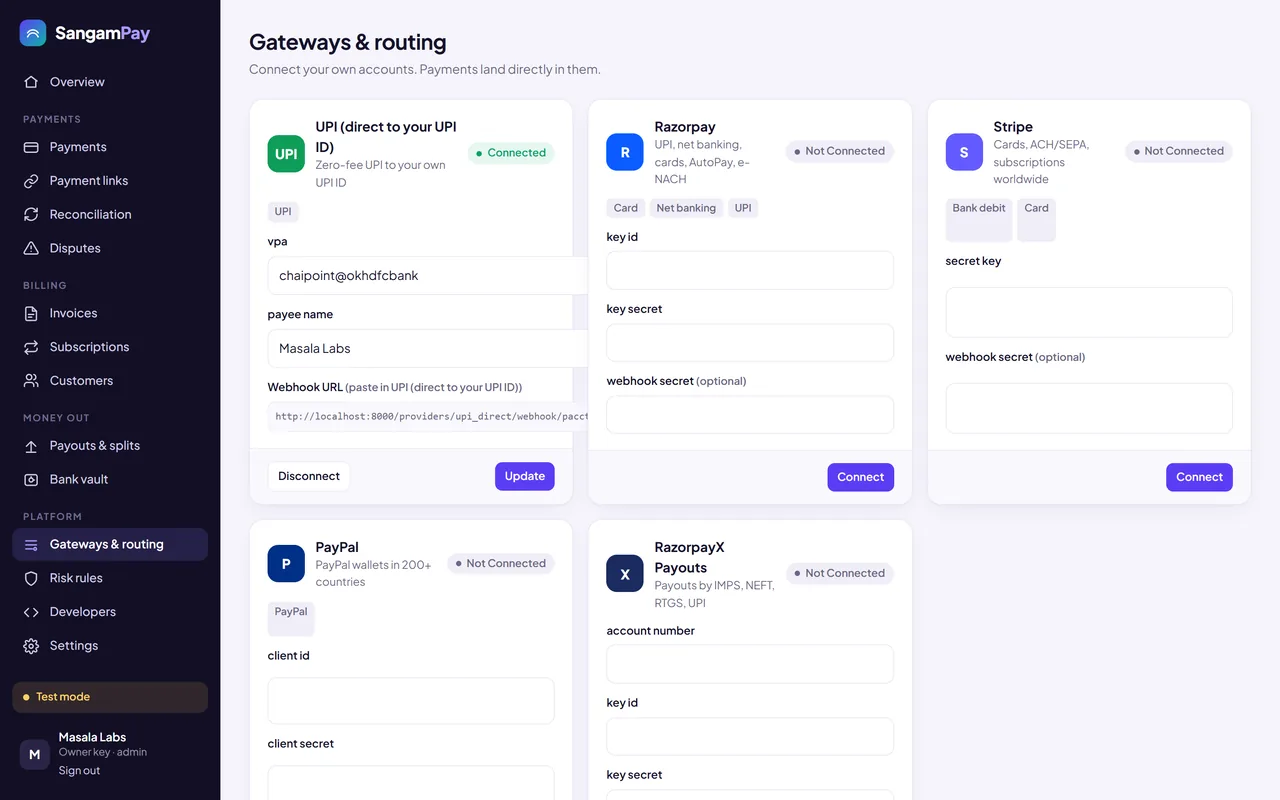
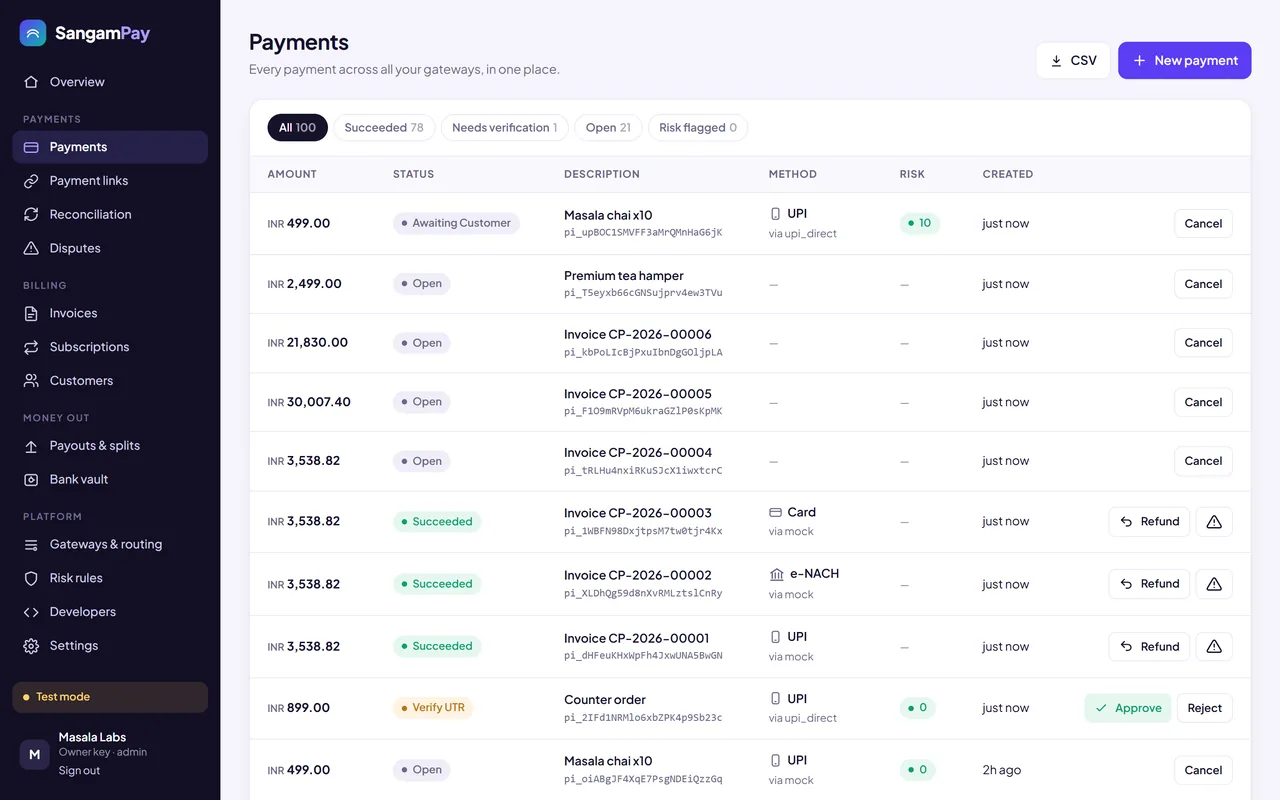
Accept UPI, cards, net banking, AutoPay subscriptions and PayPal with one API. Smart routing, GST invoices,
reconciliation and payouts are built in. Self-hosted, and the money lands straight in your own accounts.
UPIUPI AutoPaye-NACHNet bankingCardsApple / Google PayACHSEPAPayPal
₹0fee on direct UPI to your own UPI ID
5payment rails behind one API
0rupees held by us: non-custodial
100%open source, MIT licensed
Features
Everything a growing business needs
The parts that usually take five different products, in one self-hosted platform.
Accept every payment
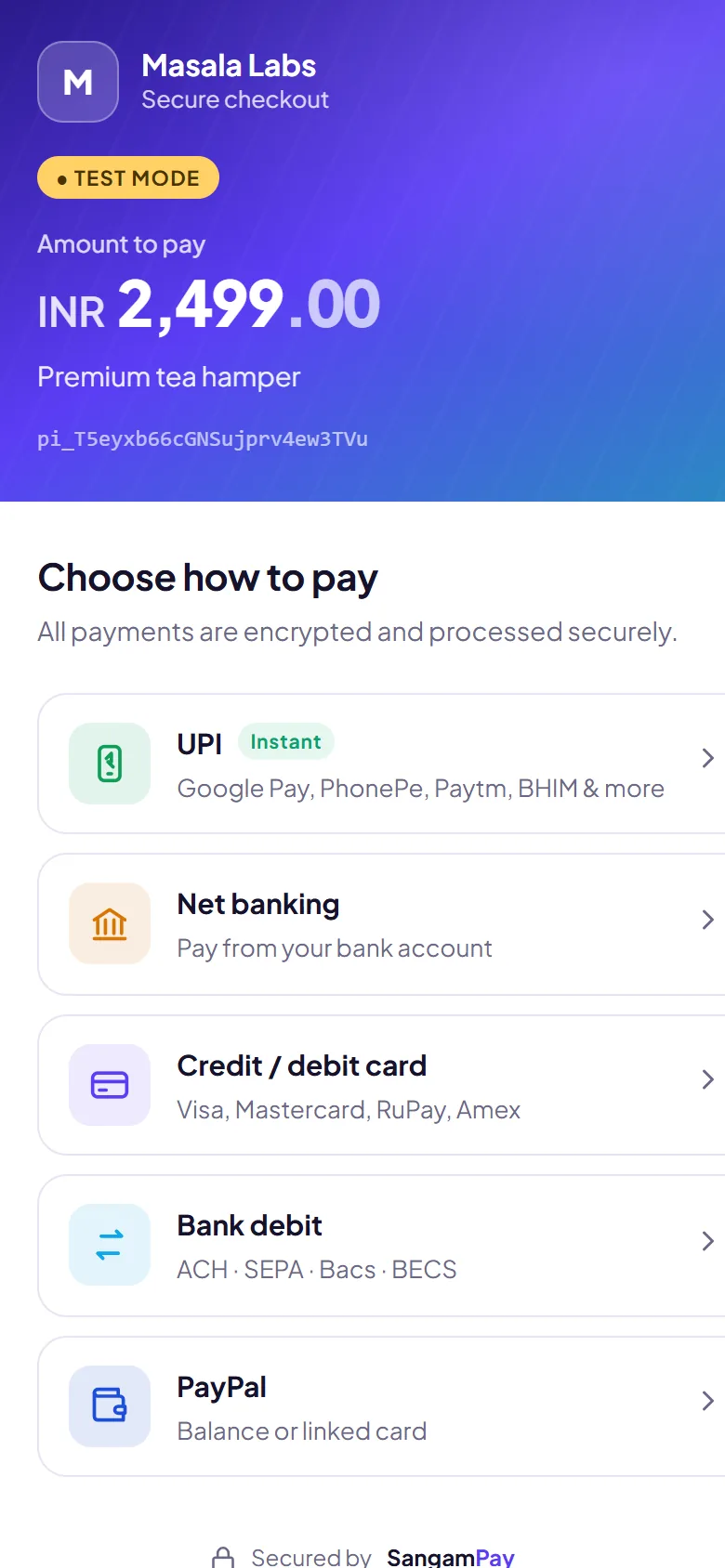
UPI (QR and intent), net banking, cards, ACH, SEPA and PayPal on a hosted, mobile-first checkout.
Subscriptions
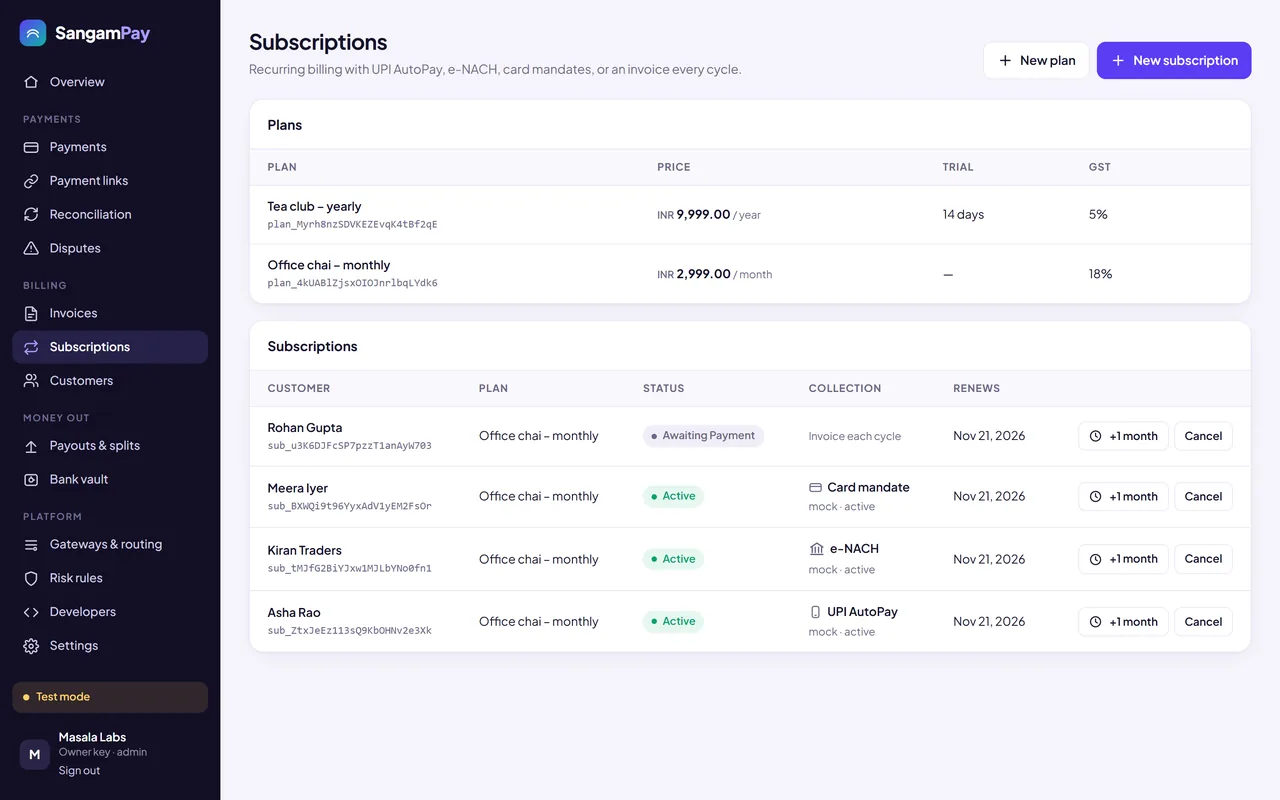
UPI AutoPay, e-NACH and card mandates, or an invoice each cycle. Trials, quantities and smart dunning retries.
GST tax invoices
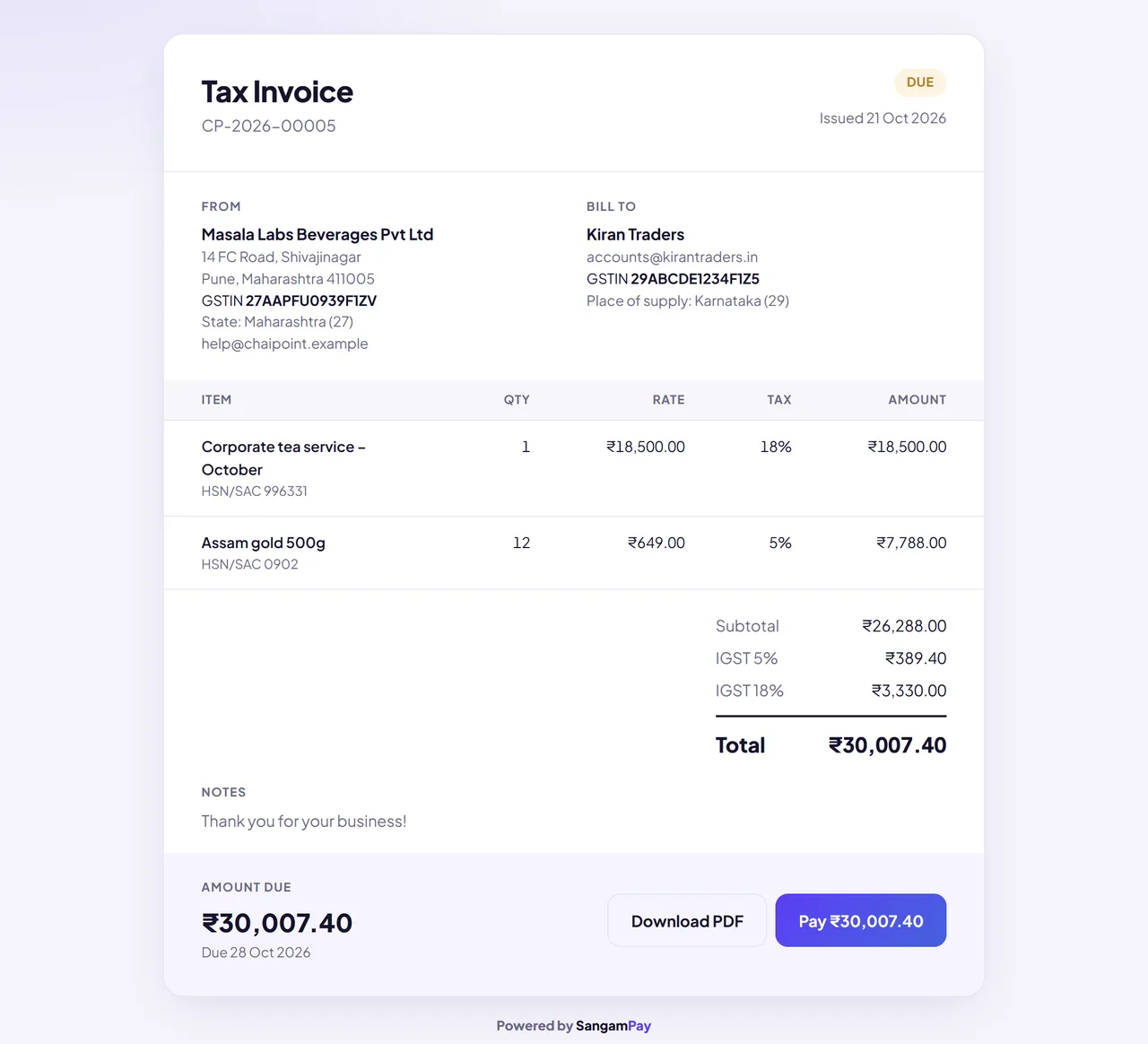
CGST + SGST or IGST chosen automatically from place of supply, with HSN/SAC codes and a Pay button.
Smart routing
Route by priority, live success rate or lowest cost. If a gateway goes down, the next one takes over automatically.
Auto-reconciliation
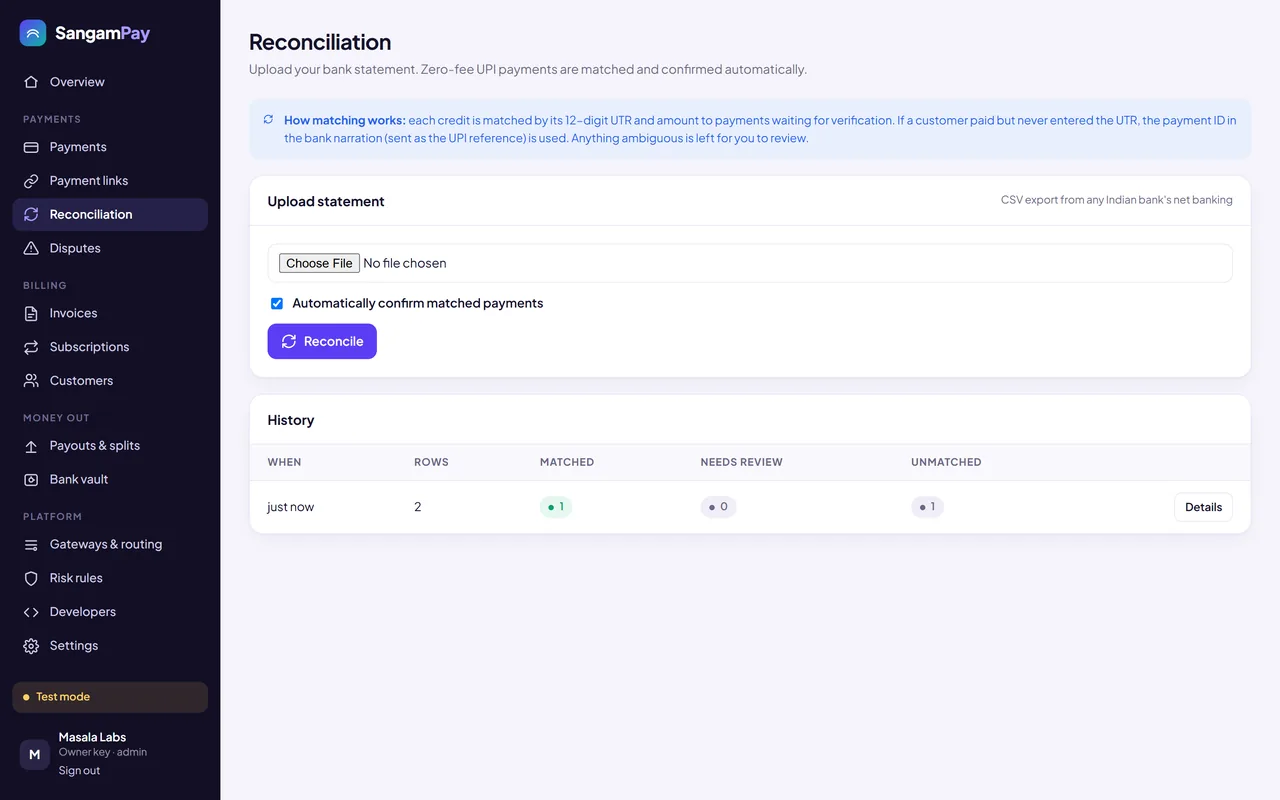
Upload your bank statement and zero-fee UPI payments are matched by UTR and confirmed for you.
Payouts and splits
Pay vendors by IMPS, NEFT, RTGS or UPI, and split marketplace payments between sellers automatically.
Payment links and QR
Sell without a website. Share a link or print a QR for your counter, with fixed or pay-what-you-want amounts.
Fraud and security
Risk scores, blocklists, velocity limits, an AES-256 encrypted vault, signed webhooks and an audit log.
One ledger, real analytics
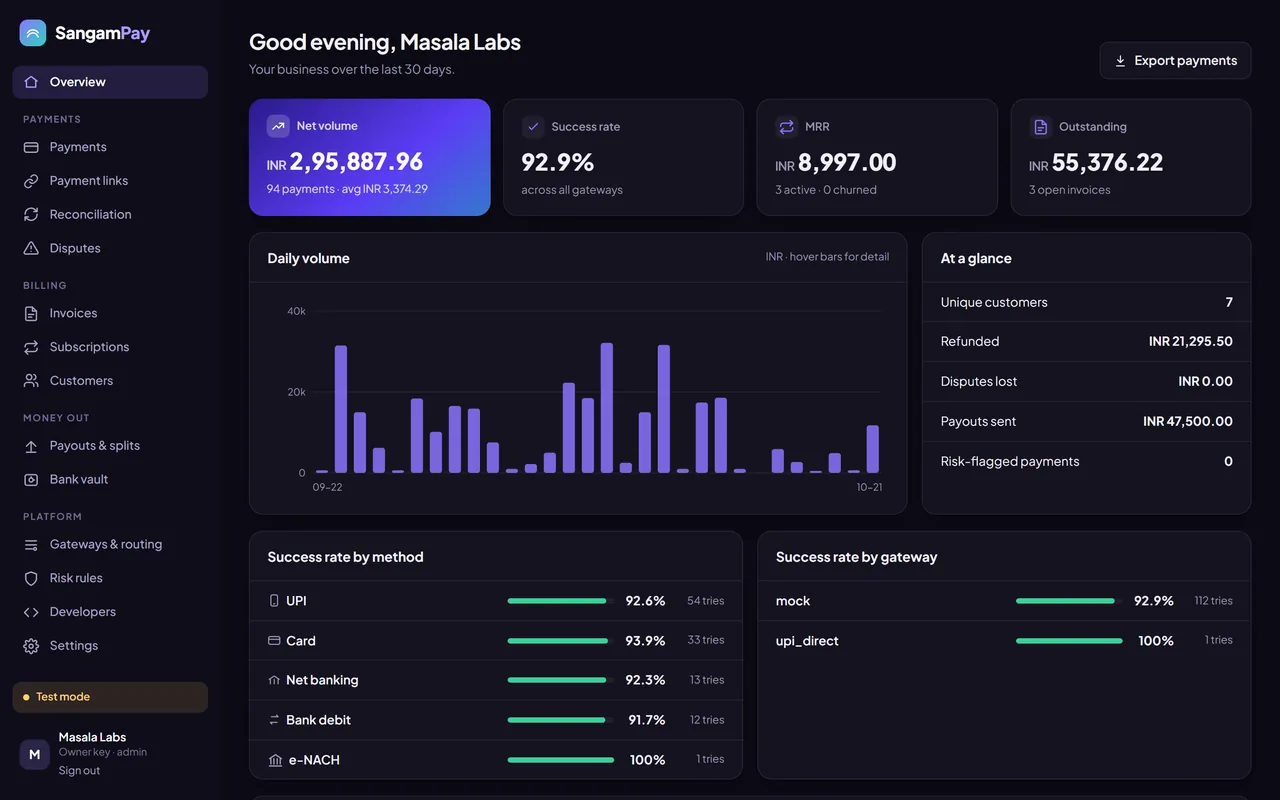
Volume, success rates by method and gateway, MRR, churn and exports across every gateway, in one place.
Why SangamPay
Gateways are silos. SangamPay connects them.
Keep the gateways you trust. SangamPay sits on top and adds what they don't have.
A single gateway
SangamPay
Gateway outage
Checkout breaks
✓Automatic failover to the next gateway
UPI fees
MDR on every payment
✓₹0 direct UPI with auto-reconciliation
Your money
Held by the gateway, settled T+1/T+2
✓Lands directly in your accounts
Reporting
One dashboard per gateway
✓One ledger across all of them
Lock-in
Contracts, APIs, data
✓Switch gateways with a config change
Source code
Closed
✓MIT open source, self-hosted, auditable
Checkout
A checkout your customers will trust
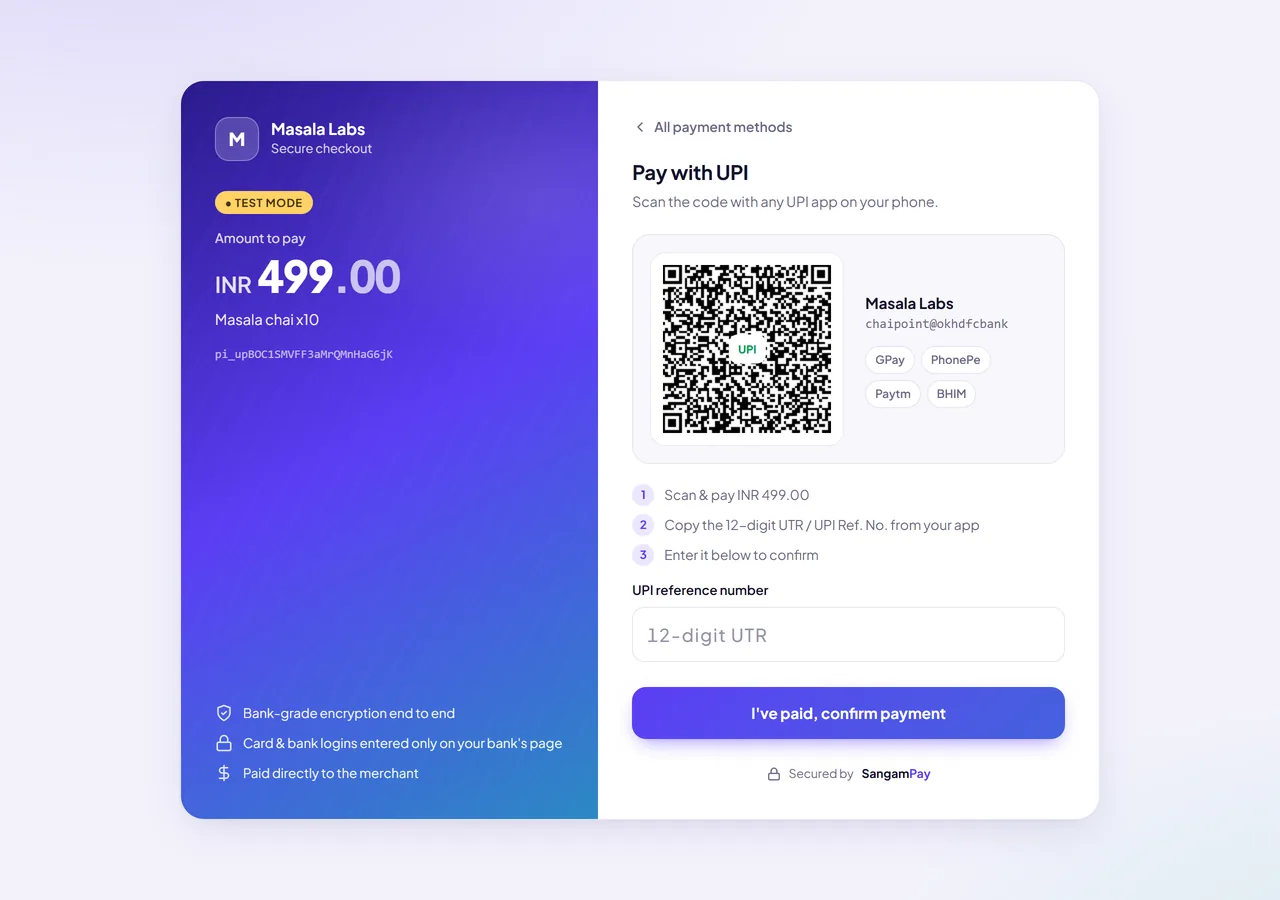
Fast, mobile-first and in dark mode automatically. Customers pick UPI, a bank or a card. Bank logins and card numbers are only ever typed on the bank's own page.
✓Zero-fee UPI: QR code, one-tap app link and UTR confirmation.
✓Every method your connected gateways support, on one page.
✓Embeds anywhere with one script tag or a plain redirect.
Billing
GST invoices and subscriptions on autopilot
Bill once or every month. SangamPay works out the tax, collects through mandates and chases failed payments for you.
✓Tax invoices with CGST/SGST or IGST, HSN/SAC and your GSTIN.
✓UPI AutoPay and e-NACH: customers approve once, renewals just happen.
✓Smart dunning retries failed renewals on your schedule.
Developers
An API you'll enjoy
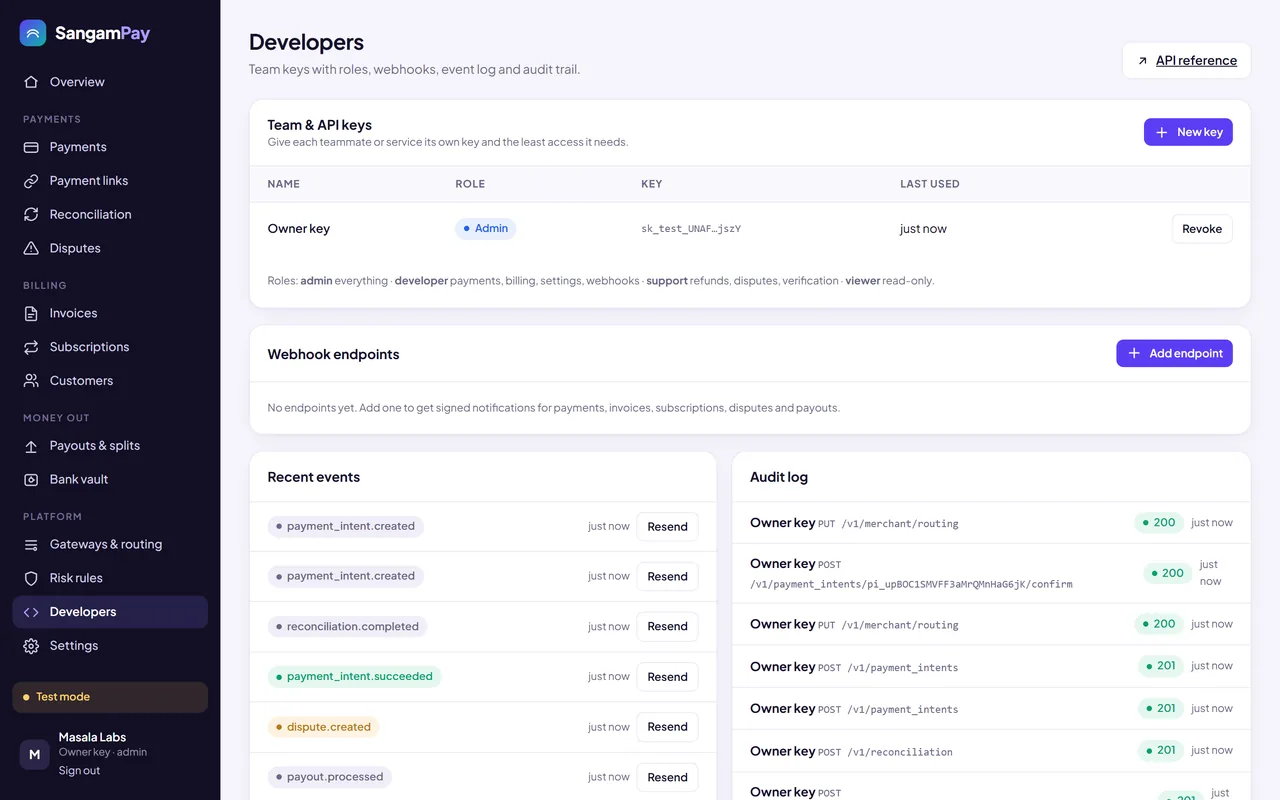
Clean REST, idempotency keys, signed webhooks, OpenAPI docs, a sandbox with time travel, and zero-dependency SDKs.
✓Python and Node SDKs with retries and webhook verification.
✓WooCommerce plugin and a Shopify bridge.
✓Team keys with roles and a full audit log.
from sangampay import SangamPay, verify_webhook

sp = SangamPay("sk_test_...")
pi = sp.payment_intents.create(
    amount=49900, currency="INR",   # ₹499.00
    description="Order #1001",
    idempotency_key="order-1001",
)
redirect(pi["checkout_url"])

# later, in your webhook handler
event = verify_webhook(body, sig, "whsec_...")
if event["type"] == "payment_intent.succeeded":
    fulfil(event["data"]["id"])
python -m sangam.demo
# prints a test key → open
# localhost:8000/dashboard
Go live
Docker + Postgres, then connect your own gateway accounts.
cp .env.example .env
docker compose up -d
Non-custodial by design. SangamPay never receives or holds customer funds. Payments settle in your own
Razorpay, Stripe, PayPal or bank accounts, which is why anyone can self-host it. Keep it that way: pooling funds for others
requires a payment aggregator licence (RBI in India).
Build payments in the open
SangamPay is free and MIT licensed. Star it, self-host it, and help add the next gateway.